

Object Record
Images
Metadata
Title |
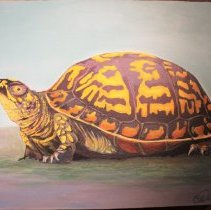
We Emerge from the Land; Eastern Box Turtle |
Artist |
Brooke Waldron |
Description |
Animal Beings carry significance for many Native communities, woodland people have long respected all creatures as relatives. This connection to the land and its animals maintained ecological balance and helped to endure seemingly insurmountable challenges throughout history. The traditional value system provided shelter, long distance sea and land travel, food and clothing for generations of Wampanoag people. The four part series of paintings, (sometimes referred to as a Quadriptych) features the mutual resilience and kinship we share with the winged-ones and the four-legged. I am connecting three basic human senses, sight, sound, and touch instinctively associated with seasons and behavioral patterns with our animal relatives. The sight of the migratory journey of Backgoose during the fall season reminds us to prepare for colder months ahead. In late winter, we hear the loud distance drumming of the Pileated Woodpecker as he protects his territory. Finally, the earth warms and the soil feels softer, allowing Turtles to emerge from the mud and Racoons to wake from hibernation. It is through this intrinsic cycle that connects us to our history and reinforces the necessity to protect and honor our environmental responsibilities. Series Title: Connected The area now known as Little Compton, RI is the traditional homelands of the Sakonnet Wampanoag people. Historic Sakonnet belongings in our collection and in private collections indicate that the Sakonnet people, and their antecedents who may have called themselves by another name, have lived and cared for these lands for at least 13,000 years. The Sakonnets appear most frequently in written records during the second half of the 17th century while led by their Sachem Awashonks, one of several female leaders in the Dawnland or Southeastern New England at that time and during the devastation of King Philip's War. They appear first in the written record in 1622. Presently, the Sakonnet people are no longer an active Native community and have not been since the late 1820s. Many Sakonnet people left their homelands in the 17th, 18th and 19th century, sometimes under great pressure from European settlers, to live within other Native and non-native communities near and far, including the Pocasset reservation at Wattuppa in Fall River, MA; Bristol, RI; Middleborough, Westport, Dartmouth, and New Bedford, MA; and likely within the Aquinnah and Mashpee Wampanoag communities. Many Sakonnet men also sought employment at sea. People who believe they have Sakonnet ancestors still live locally. |
Object Name |
Painting |
Catalog Number |
2025.7.3 |
Material |
Canvas |